

Building on the success of I-SPY2, the I-SPY consortium, in collaboration with QLHC, have once again re-engineered the clinical trial, maintaining its focus on efficiency while permitting the optimization of treatment for each individual patient in the context of patient-friendly, phase II drug development.
Like its predecessor, I-SPY2.2 uses the neoadjuvant treatment approach. The primary endpoint remains pCR, and is supplemented by secondary endpoints including Residual Cancer Burden (RCB) and a combined efficacy/toxicity score.

The platform clincial trials, pioneered by the ISPY clincal consortium evaluates multiple experimental treatments in parallel. The master protocol, established in 2010, has tested more than 40 novel therapies and combinations.

The I-SPY trials employ a variety of imaging and molecular technologies to monitor response. Moreover, the I-SPY network of pathologists and research scientists at multiple institutions continue to develop new approaches for improved monitoring.

I-SPY2.2 uses molecular response-predictive subtypes to characterize each participant's tumor in order to guide treatment assignments and assess subtype-specific efficacy of treatment.
The I-SPY network has develped new predictive tests and algorithms to identify subgroups of patients who respond to specific cancer therapies.

Unique to ISPY, patients are treated with the goal of maximizing response. If a therapy is effective, treatment continues until surgery. If response is insufficient, patients recieve intensified treatment. In this way, treatment more closely mirrors clinical care.

Participants get no more treatment than needed to limit potentially life-long side effects. A key goal is long-term remission with minimal side effects.

Complementing I-SPY's novel clinical design, the ISPY investigators actively engage new biomarker discovery and validation. These new ways to characterize cancers will allow for new insights and more personalized medicine in the future.
I-SPY2.2 integrates a sequential multiple assignment randomized trial into the platform design. Imaging tools developed over the 10-year course of I-SPY2 allows longitudinal monitoring of tumor response that guide the course of treatment with rules-based algorithms. Patients demonstrating a complete response after a course of therapy can forgo further systemic treatment and undergo definitive surgery. Participants with suboptimal response to one therapy are given the option of receiving a different, biologically targeted therapy matched to their tumor type or a more traditional, rescue therapy prior to surgery. The result is the ability to optimize individual patient outcomes and minimize drug exposures to limit side effects, while identifying new agents and combinations that have a high probability of impacting future care.
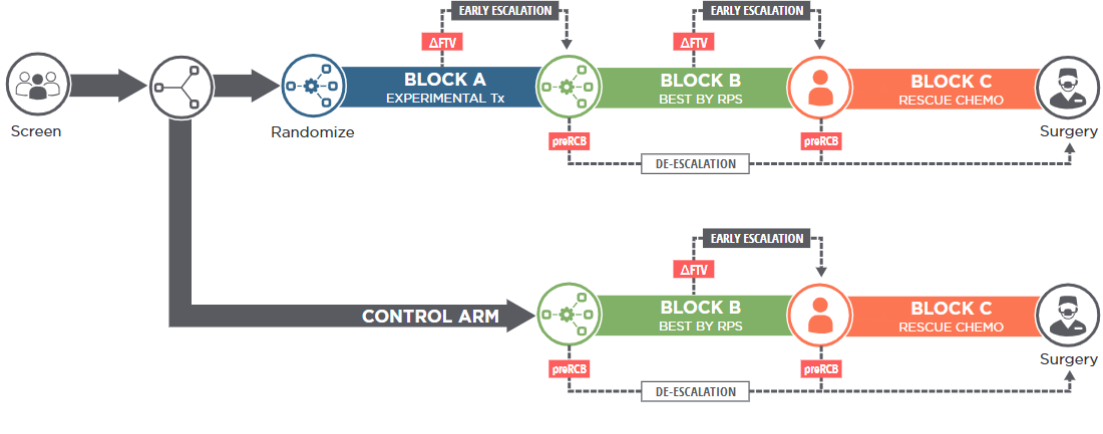
I-SPY2.2 is open to adults age 18 or older with stage II or III early breast cancer at high molecular risk of recurrence. Women with HR+/HER2- disease at low risk of recurrence may be eligible to participate in the I-SPY Endocrine Optimization Protocol trial.
I-SPY2.2 operates at participating sites across the United States, including OHSU, UCSF, UC Davis, Hoag Institute, USC, City of Hope, UCSD, Huntsman, UC Denver, Mayo Clinic, U Minnesota, Henepin County MC, Loyola, Silver Cross, Gottlieb Memorial, U Rochester, Roswell Park, Cooperman Barnabas, Yale, NYU Langone, Columbia, Rutgers, UPenn, Georgetown, MedStar Wash, Wake Forest, UAB, Emory, Moffitt, U Miami, Ohio State, and UChicago.
Click here to download a list of I-SPY Trial Sites.
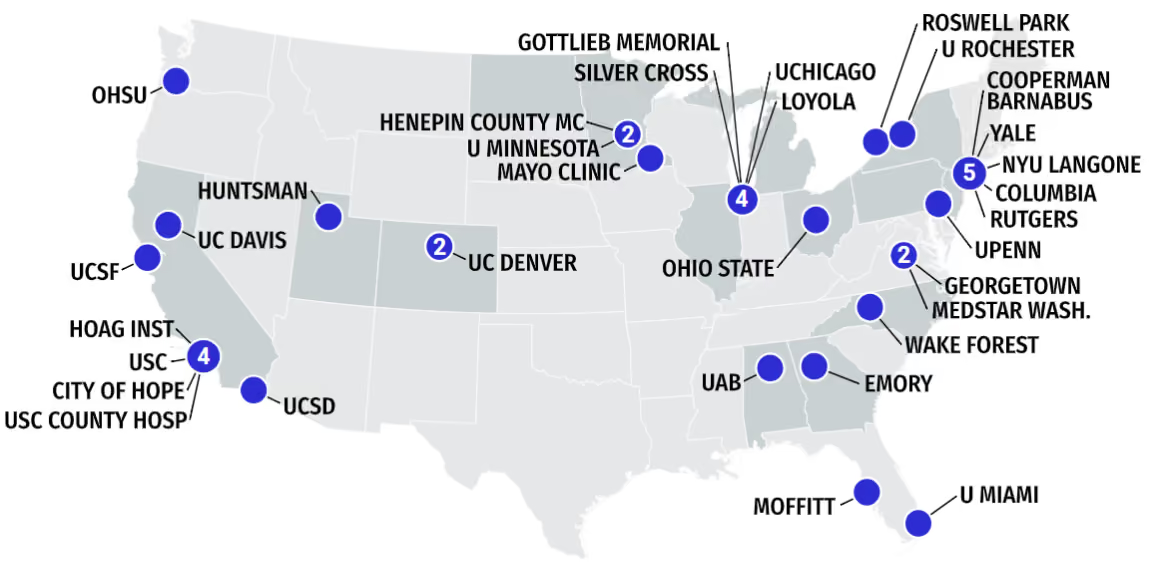
I-SPY2.2 is funded by the National Cancer Institute of the National Institutes of Health (NIH) under award number P01CA210961, and a number of generous donors. If you are interested in supporting I-SPY2.2, please see our giving pages.
Shatsky RA, Trivedi MS, Yau C, et al. Datopotamab–deruxtecan plus durvalumab in early-stage breast cancer: the sequential multiple assignment randomized I-SPY2.2 phase 2 trial. Nat Med. 2024;30(12):3737-3747. doi:10.1038/s41591-024-03267-1
Khoury K, Meisel JL, Yau C, et al. Datopotamab–deruxtecan in early-stage breast cancer: the sequential multiple assignment randomized I-SPY2.2 phase 2 trial. Nat Med. 2024;30(12):3728-3736. doi:10.1038/s41591-024-03266-2
ClinicalTrials.gov registration: NCT01042379